Bat out of Hell – a Rock opera inspired by the music of Meatloaf (5 stars)
Meat Loaf has long since transcended the realm of mere entertainer, rising to something closer to a mythic rock god. His music has spanned generations, leaving a lasting imprint on the sound of popular music. He is best known for his 1977 album Bat Out of Hell, followed nearly two decades later by Bat Out of Hell II: Back into Hell. Both became best-selling albums, defining a unique and theatrical style that endured for decades.
Meat Loaf first entered public consciousness through musical theatre, appearing in productions such as the countercultural phenomenon Hair! and delivering a memorable performance as Eddie in The Rocky Horror Picture Show. It was in this world that he met composer Jim Steinman, beginning a lifelong creative partnership. Steinman wrote the songs, and Meat Loaf brought them to life with his powerful voice. Though both pursued solo projects; Meat Loaf notably as an actor and reality television personality, their collaboration remained central to their legacy until his passing in 2022.
It’s no surprise, then, that his music lives on in the stage musical Bat Out of Hell, which primarily features songs from the first two albums. “Primarily” is the key word here, as the show also includes a few songs composed by Steinman that were made famous by other well-known artists, yet still feel right at home within this world of rock and roll.
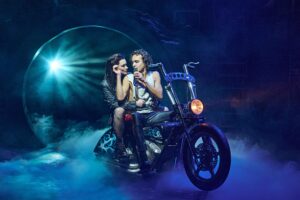
From the moment you walk into the theatre, the set makes a strong impression. It resembles a backstage storage area, complete with a truss arch, road cases, and band platforms. This clever design evokes a post-apocalyptic atmosphere while maintaining a minimalist aesthetic. The costumes further reinforce this tone, often leaning into a Mad Max-inspired, punk rock style.
Two large screens project live video throughout the show, giving it a distinctly modern rock-and-roll aesthetic. Audiences are already familiar with the use of massive screens in stadium concerts, where live performances are magnified for scale. Here, however, that concept is elevated within a theatrical setting. The camera work captures the action with a stylized approach that evokes the look and feel of an MTV-era music video perfectly suited to a rock opera. At the same time, these screens serve a practical purpose, highlighting key details and plot points that might otherwise be missed on stage. It’s worth paying close attention to them.
The production leans heavily into darkness and intentionally so. Much of the lighting relies on backlight, with the principal characters isolated in sharp spotlights. The result is a grim, gritty atmosphere reminiscent of films like Streets of Fire and The Warriors, reinforcing the show’s dystopian edge.
That said, the sound design was a noticeable weak point. During the opening act in particular, the mix was poor enough to be a significant distraction, pulling the audience out of the experience. Vocals were often difficult to understand, while certain instruments seemed to disappear entirely. Although the balance improved as the show progressed, this is not the level of quality one expects from a professional production in one of Boston’s major theatres.
The story centers on the star-crossed lovers Strat and Raven. This is unsurprising, given much of Meat Loaf’s music explores the intensity and heartbreak of youthful romance. Strat is a Peter Pan–like figure, leading a troupe known as The Lost, clearly echoing the Lost Boys of Neverland. There’s even a character named Tink, an obvious nod to Tinker Bell. Running alongside this is a subplot involving an older couple, Falco and Sloane, as they attempt to rekindle their lost love. Perhaps this is an element clearly intended to resonate with older audiences who grew up with Meat Loaf’s music.
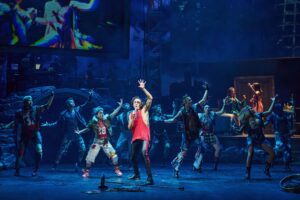
The principal singers all deliver performances worthy of their muse, Meat Loaf. This is no small feat, as his music demands both vocal depth and range, with many songs requiring sustained, complex notes. The cast rises to the challenge admirably. The score is filled with romantic duets, and there is certainly no disappointment in that department, as the leads fully embrace the sweeping, emotional ballads. Interestingly, fans of Bat Out of Hell will also recognize snippets of spoken word woven into the show such as a line here, a poetic passage there that add familiar touches that provide an extra layer of nostalgia.
Don’t expect a complex or tightly woven narrative. The plot is minimal, serving primarily as a framework to connect the songs. That’s the trade-off when building a musical from tracks that, while thematically linked, were never intended to tell a single, cohesive story. And honestly, what would you expect from someone who rose to fame in Hair and The Rocky Horror Picture Show? Instead, the show leans into what it does best: delivering high-intensity rock ballads staged like the kind of music videos audiences grew up with.
This would easily be a five-star show were it not for the poor sound quality at the beginning. The issues were significant enough to feel unprofessional, ultimately bringing the rating down slightly. In a musical, sound should be the top priority, and it’s unfortunate that the performers’ hard work was undercut by inconsistent audio engineering.
Overall, the show is a fun, nostalgic trip down memory lane for those who grew up during the eras when Bat Out of Hell defined their teenage soundtrack. If you’re a fan of Meat Loaf, this is an especially enjoyable, sing-along experience.
Bat out of Hell will be touring the Northeast. For more information, visit: http://batoutofhellmusical.com/